 Regulated by the Chartered Institute of Taxation
Stop paying tax
on rent you never keep.
That is what Section 24 does: mortgage interest is no longer deductible, so a higher-rate landlord is taxed on money that went straight to the lender. Capital gains tax then takes 24% on a residential sale, and inheritance tax 40% of what is left. How a portfolio is owned decides all three — and it is the one thing that can still be changed. ASWATAX has been reducing landlords' tax since 2011.

Get the free guide
Tax Saving Strategies for UK Property Landlords — a plain-English breakdown of Section 24, capital gains tax, inheritance tax and the ownership structures that change them, with real client case studies and the numbers attached.
Regulated by the Chartered Institute of TaxationRegulated by the Chartered Institute of Taxation
- Chartered Tax Advisers
- Property Tax Specialists
- In-house Legal Team
- HMRC Clearance Included
- Fixed Fees — No Surprises
- Direct Senior Access — Always
Three taxes decide what a portfolio is actually worth.
Not the rent, and not the valuation. These three, and how much of each you pay is largely decided by how the property is owned.
Section 24 mortgage interest restrictions
Since April 2020 landlords can no longer deduct mortgage interest from rental income. You get a flat 20% tax credit instead, whatever rate you actually pay. For a higher-rate taxpayer that means being taxed on rent that went straight to the lender.
- ✓Bigger tax bills on the same rent
- ✓Cash flow squeezed as rates stay high
- ✓In leveraged portfolios, tax due on a property that is losing money
CGT exposure when you sell
Rates on residential property gains sit at 24%, and the annual exemption has been cut to £3,000 — so far more of every gain is now taxable than was the case a few years ago.
- ✓24% on residential gains for higher-rate taxpayers
- ✓£3,000 annual exemption, down from £12,300
- ✓Report and pay within 60 days of completion, or automatic penalties follow
40% of the portfolio, on death
IHT is charged at 40% above the £325,000 nil-rate band. The residence nil-rate band adds £175,000 but tapers away entirely once an estate passes £2m — which most portfolios do.
- ✓Property is valuable and illiquid, and the tax falls due before probate
- ✓Heirs are regularly forced into a quick sale to pay it
- ✓Values have risen faster than the thresholds, which have been frozen
Most portfolios were never structured — they accumulated.
One property, then another, then a third, each bought in whatever way was easiest at the time. That is not a failure of judgement; it is just what growth looks like. It does mean the structure is rarely the one you would choose today.
Direct ownership
Rental profit taxed at your marginal rate — up to 45% — with no corporate protections and no flexibility over when income is drawn.
Restricted relief
Under Section 24 the ability to offset finance costs against rental income is severely restricted for individual owners, and not at all for companies.
Inheritance problems
Property held in personal names is an inefficient way to pass wealth on: hard to gift in slices, hard to value, and fully exposed at 40%.
Trusted by property investors across the UK.
Join over 200+ landlords and investors who have restructured with us.
"The ASWATAX team's highly professional and clear approach to our inheritance tax plan has given us immense peace of mind. Highly recommended for their exceptional service and aftercare."
"Working with ASWATAX for two years, I can't fault their responsiveness and the thoughtful, professional structuring of my tax planning. Their expertise is truly invaluable."
"Omar at ASWATAX provided exceptional advice on property incorporation, offering insights even our accountant hadn't considered. His recommendations were awesome, and we are now implementing them. Highly recommended!"
"ASWATAX conducted a detailed analysis for my family businesses, providing various options. They expertly set up a Family Investment Company and restructured our parent company's shares. Their professional advice and implementation have been faultless."
Comprehensive property tax planning.
Four areas, and most engagements touch more than one — because moving a portfolio into a company is simultaneously an income tax decision, a CGT decision, a stamp duty decision and an inheritance tax decision.
Property incorporations
Moving a personally held portfolio into a limited company in a tax-efficient way — reducing income tax, restoring mortgage interest relief, and where the reliefs apply, doing it without triggering capital gains tax or stamp duty. Always within HMRC's rules, and always tested against your numbers before we recommend it.
Corporate structures
Property investment companies to reclaim full mortgage interest relief at lower corporation tax rates, and holding company groups to sit above your SPVs so profits move between companies without tax leakage.
Family planning
Family investment companies, trusts and bespoke family partnerships designed to reduce inheritance tax and pass wealth on — while you keep control of how and when anything is distributed.
Capital gains strategies
Planning that defers, reduces or restructures a CGT liability through compliant asset structuring, whether you are selling, gifting or reorganising high-value property.
What this actually looks like.
Six structures we design and implement. Which one fits depends on how the portfolio is held now, how it is financed, and what you want to happen to it.
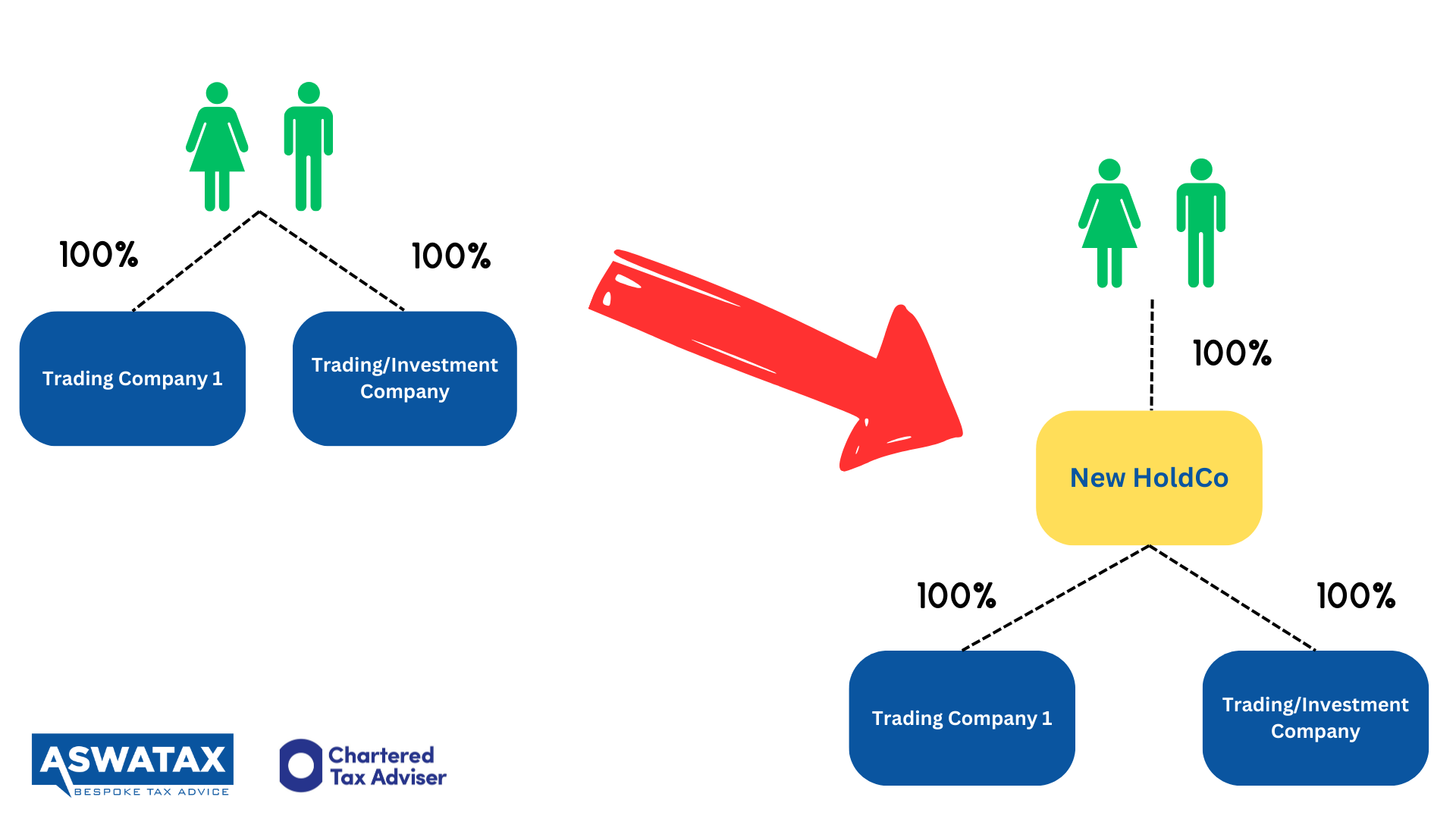
A holding company above your SPVs
A HoldCo sitting above your property companies lets profits move between them without tax leakage, ringfences risk on individual developments, and simplifies refinancing at group level. It also makes inheritance tax planning far easier — shares in a company are much simpler to transfer, freeze or restructure than fragmented property assets.
Incorporating the portfolio (s162)
Where the portfolio is run as a genuine business, incorporation relief under s162 can roll the latent capital gain into the shares rather than taxing it on transfer. Inside the company, finance costs are deductible again and profits are taxed at corporation tax rates — with dividends drawn when it suits you rather than when the rent arrives.
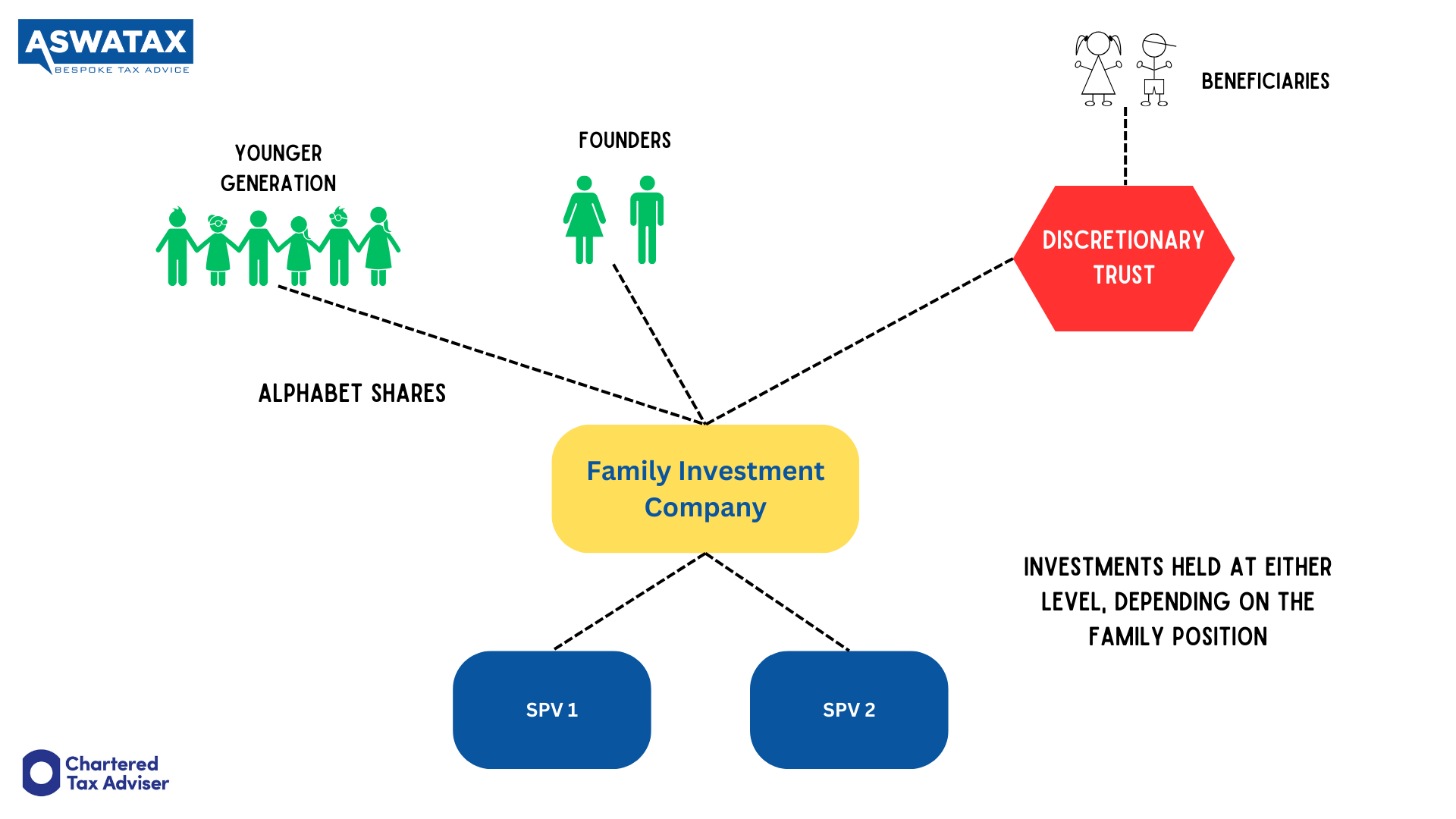
Family investment company with a trust
Share classes designed so you keep the votes while growth passes to the next generation, usually blended with a discretionary trust. More flexible than a trust alone, taxed at corporation tax rates inside the company, and no ten-yearly charge.
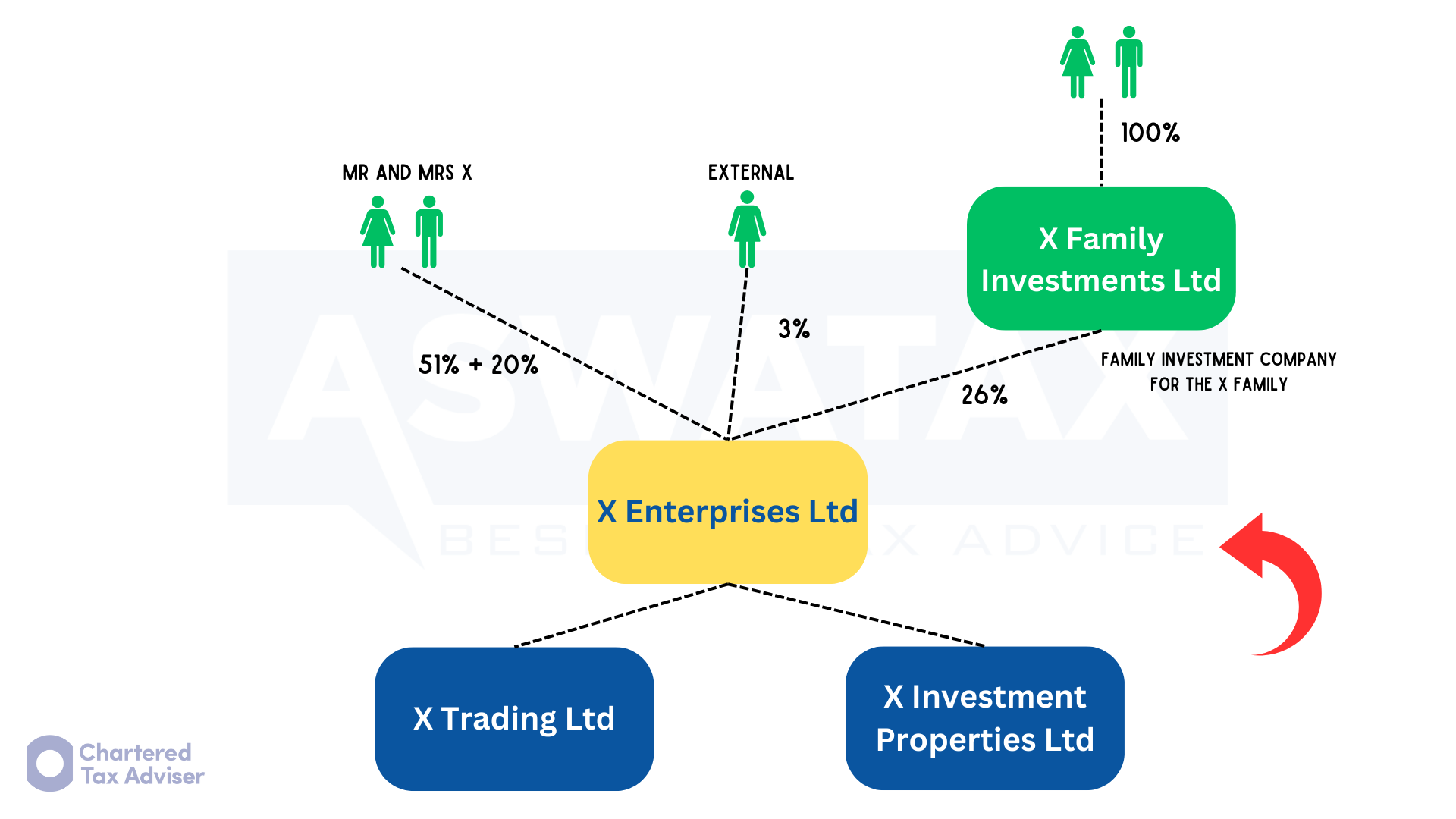
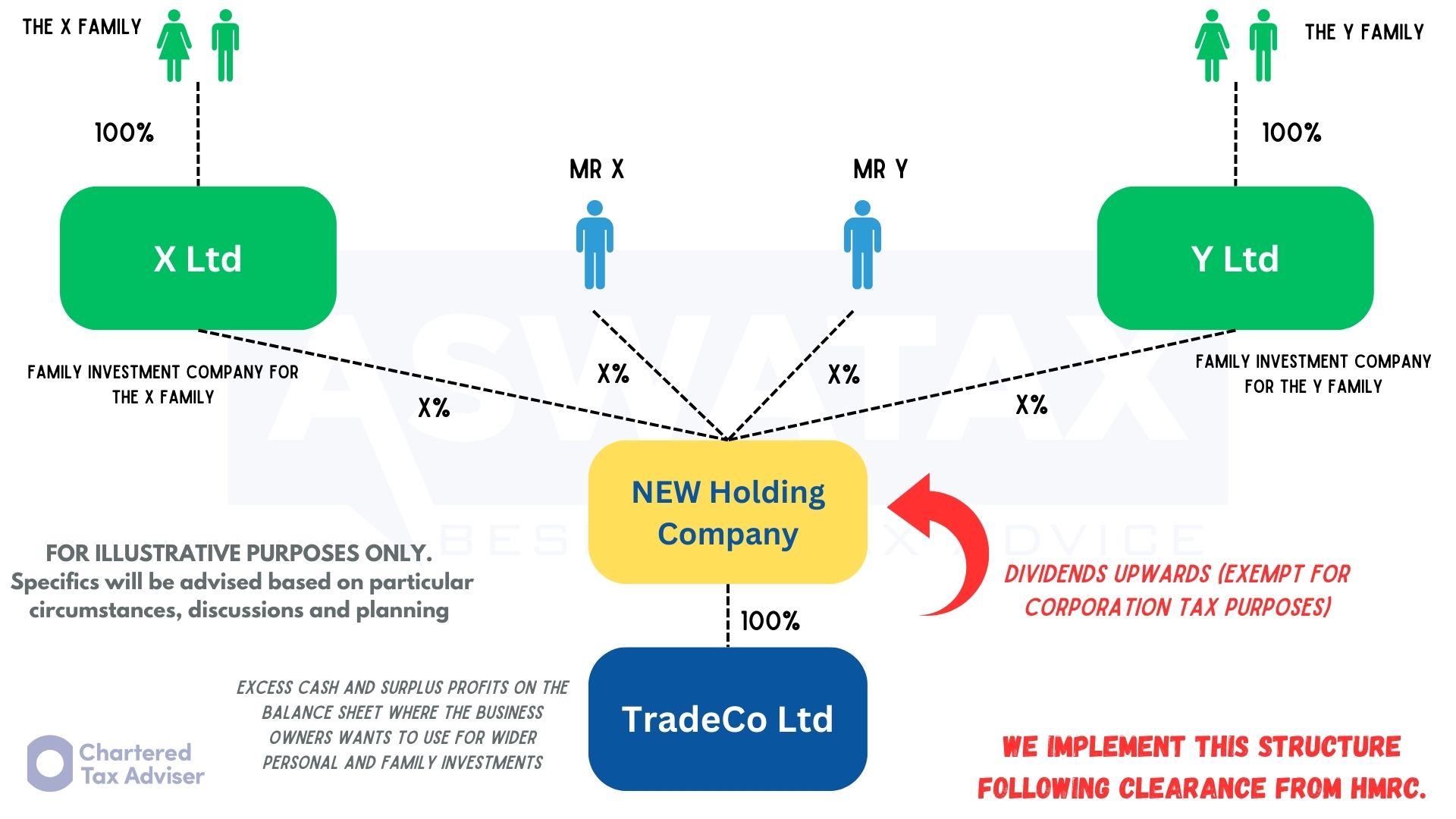
A linked investment company
For trading business owners, a separate investment company ringfences surplus profits for reinvestment into property and other assets — without putting the trading company's valuable reliefs at risk. Implemented with HMRC clearance, and without tax exposure on the shareholders.
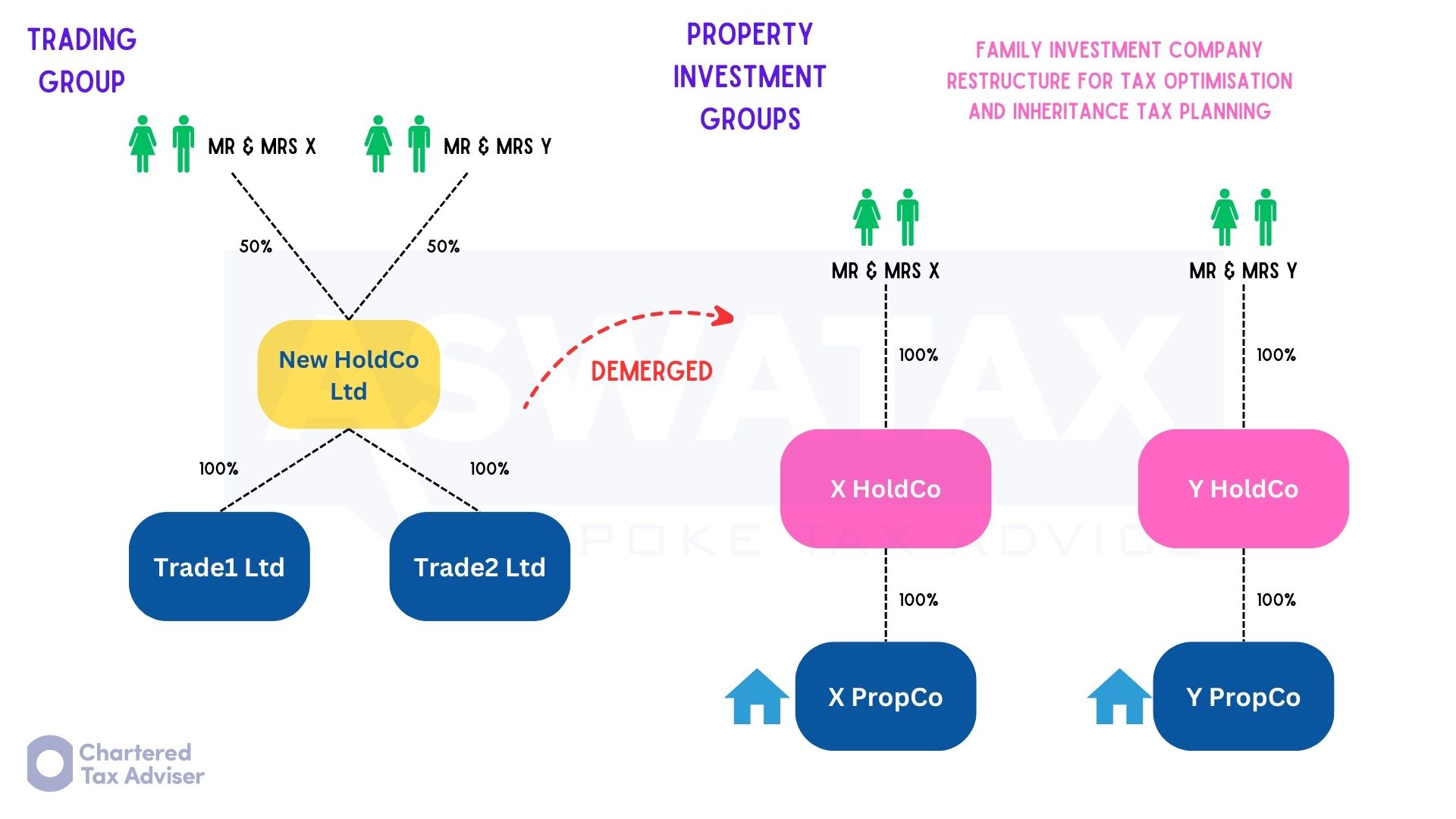
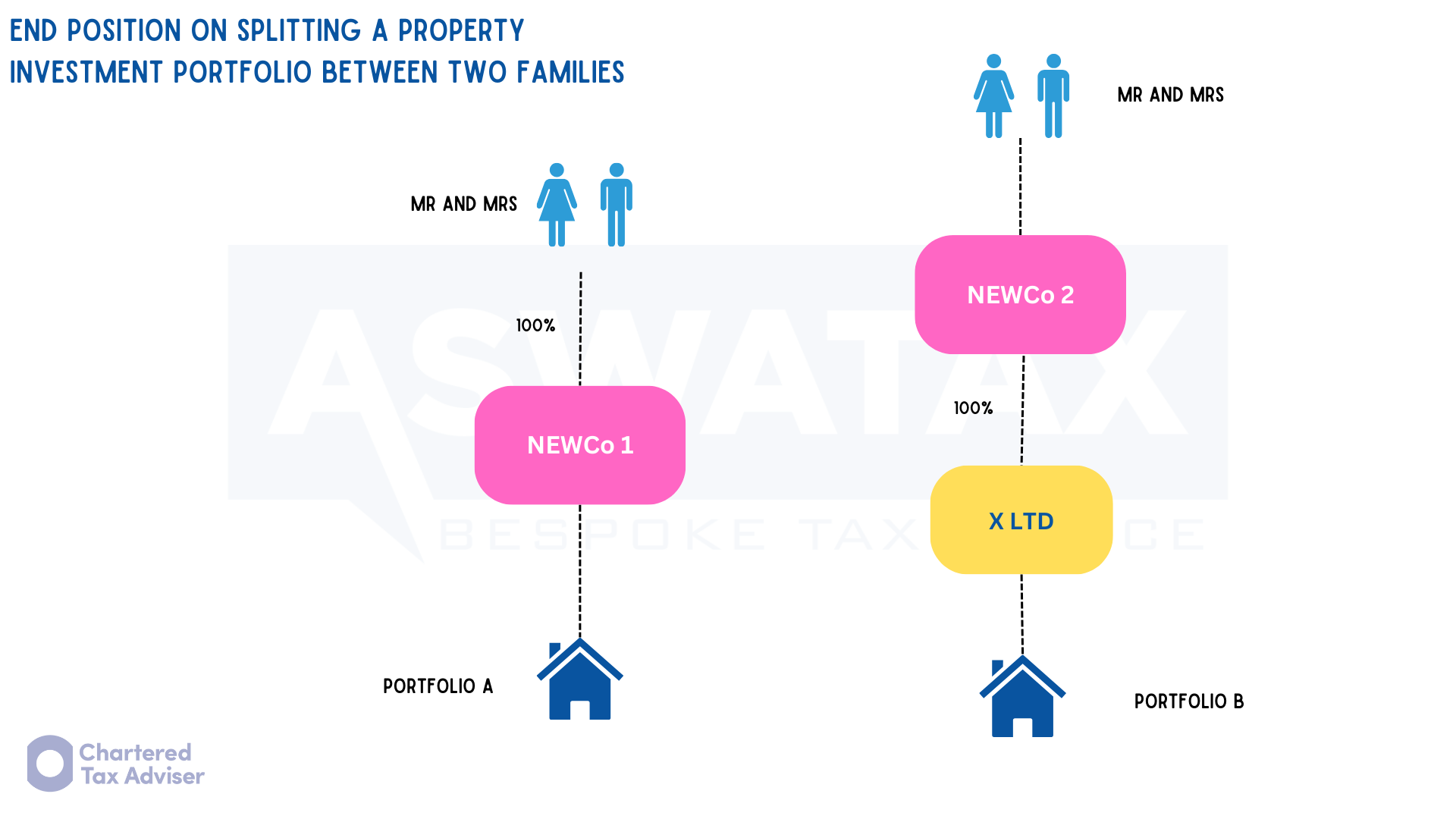
Capital reduction demerger
Where a mixed portfolio needs separating — different family members, unconnected shareholders, or a partial sale coming — a demerger splits properties into distinct companies cleanly. Technically involved, but done properly it can be achieved with no CGT, corporation tax or income tax charge on the shareholders.
Hybrid structures
Most real portfolios do not fit one template. Trading companies, property held personally, an SPV or two and a family trust already in place is the normal starting point, and the right answer is usually a combination rather than a single move.
What changes when the structure changes.
Before
Owned the way most portfolios end up being owned
- High income tax: Rental profits taxed at personal rates of up to 45%.
- Restricted relief: Finance costs largely non-deductible under Section 24.
- CGT exposure: A large capital gains bill in the way of moving anything.
- IHT risk: 40% of the property wealth passing to heirs.
- Structure issues: Assets held in a way that is tax-inefficient and personally exposed.
- Missed reliefs: Valuable reliefs and allowances overlooked for want of planning.
After
Owned the way it would be if you started today
- Lower rates: Rental profit taxed at corporation tax rates instead.
- Relief restored: Full mortgage interest relief reclaimed inside a corporate structure.
- CGT addressed: Reliefs used to move property into a company without a CGT charge.
- IHT planned for: Structured so that growth passes on and the exposure is reduced.
- Right structure: Assets arranged for tax efficiency and asset protection.
- Reliefs claimed: Every available relief and allowance used, proactively.
Not every portfolio can reach the right-hand column, and we will tell you if yours cannot. The point of the first call is to find out which one you are looking at.
Eight properties, £45,000 a year in tax.
Challenge
Portfolio landlord with 8 properties worth £1.2M, facing a £45,000 annual tax bill under Section 24 and significant capital gains exposure on any sale.
Solution
Ownership restructured into a limited company and family trust, with staged property transfers and stamp duty mitigated through the reliefs available.
Result
Tax liability reduced by £18,000 a year, and inheritance tax exposure cut by 30%.
One client's outcome on their own facts. Yours will differ — the reliefs that made this work do not apply to every portfolio.
Not ready to book? Tell us about it and we'll come to you.
A few questions about how the portfolio is held and financed, and a Chartered Tax Adviser will come back to you within one working day — usually the same day — with something useful rather than a diary invite. No obligation, and your details are never shared.
Watch before you decide.
The same explanations we give on the first call, in plain English and worked through with real client numbers.
Section 24, CGT and IHT on a property portfolio — a real case study
How s162 Incorporation Relief cut one owner's tax bill
From first call to completed restructure.
30-minute consultation
Thirty minutes with a Chartered Tax Adviser to understand how the portfolio is held, how it is financed, and what you want to happen to it. No obligation.
Request your call →Bespoke tax analysis
A full review of your ownership position, the options open to you with the numbers attached, and an honest view on whether any of them pays for itself.
HMRC clearance where it's needed
Where the plan needs it, we prepare and submit the clearance application and handle every query until HMRC confirms. You don't have to chase anyone.
Legal implementation
Our in-house lawyers execute the restructure, prepare the documents and handle the Companies House filings — then hand a pack to your accountant.
Not your average tax advisory firm.
ASWATAX is a specialist UK tax advisory firm. Every engagement is led personally by a qualified Chartered Tax Adviser — never passed to a junior, never handled at arm's length.
Chartered Institute of TaxationProperty is the specialism
Section 24, incorporation relief, the 60-day CGT window and the inheritance tax position on a portfolio are core work here, not an occasional sideline picked up between company accounts.
In-house legal team
Unlike most tax advisers, we have our own lawyers. No separate solicitor to brief, no delays, no double fees — one firm, one fixed fee, everything included.
We say when the answer is no
Incorporation does not pay for itself for every portfolio, and stamp duty is often the reason. Where the numbers do not work we say so on the first call rather than after the fee is paid.
Fixed fees — always
You'll know exactly what you're paying before we start. No hourly rates, no scope creep, no invoice surprises. The fee we quote is the fee you pay.
FAQs
Protect your property income and wealth.
Thirty minutes with a Chartered Tax Adviser. We'll look at how the portfolio is held, tell you what is actually possible, and give you a fixed fee before anything starts.